
3.10 虫垂炎と免疫系・腸内細菌叢の関係
2025.10.03
⑴ 虫垂の機能とその再評価
かつて虫垂(盲腸の先端にある管状の突起)は、退化した器官として不要とされてきました。
しかし近年の研究により、虫垂は免疫機能と腸内細菌叢の調節に関与する重要な役割を果たしていることが明らかになっています。[1]
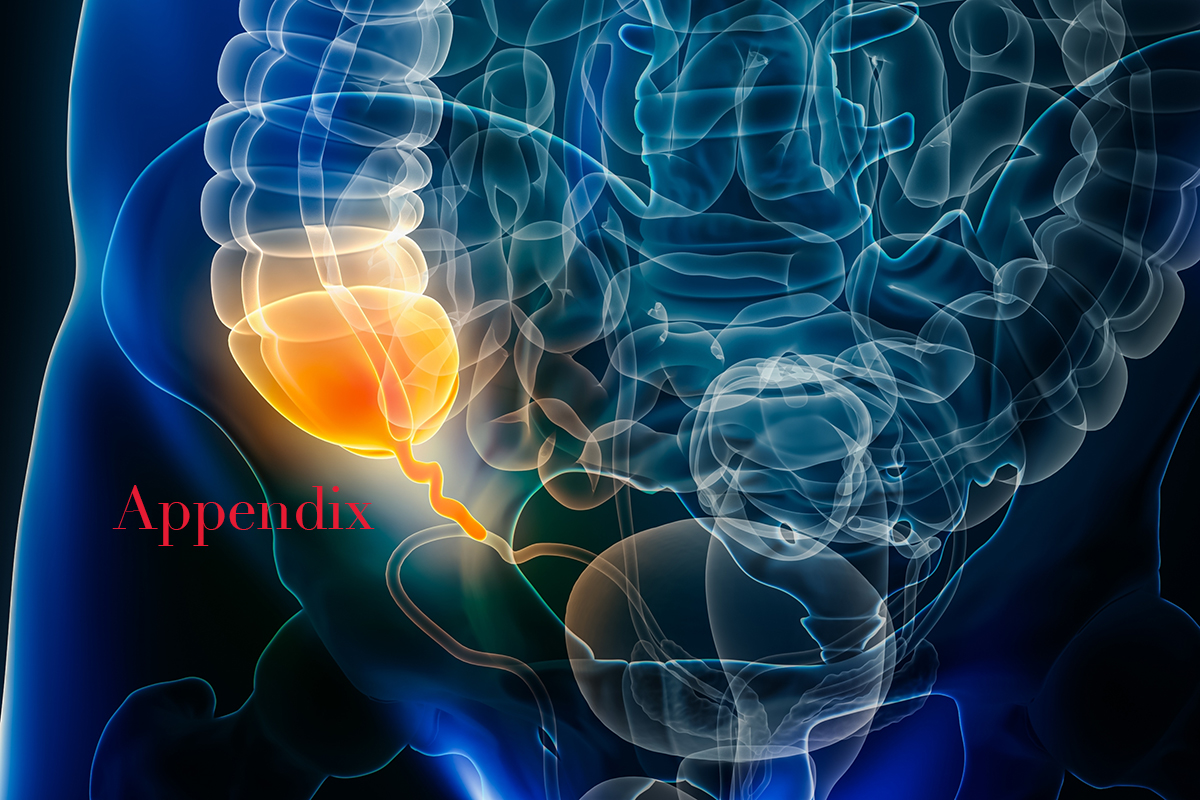
Appendicitis disease or vermiform appendix inflammation 3D rendering illustration.
特に虫垂の粘膜にはリンパ組織が豊富に存在し、腸内での免疫応答に寄与しているほか、善玉菌の「リザーバー(貯蔵庫)」としての働きも担っているとされます。
このため、感染症や抗生物質投与後の腸内細菌叢の再構築に虫垂が関与している可能性が示唆されています。[2]

⑵ 虫垂炎の発症要因と食生活の関係
虫垂炎は、虫垂内の閉塞と細菌感染によって炎症を起こす疾患であり、閉塞の原因として糞石(硬い便のかけら)、腫瘍、寄生虫、リンパ組織の過形成などが知られています。
特に便秘傾向や腸内環境の悪化は、虫垂内の細菌の異常増殖を助長し、炎症を引き起こすリスクとなります。[3]
また、低食物繊維・高脂質・高糖質の食事が腸の動きを低下させ、便秘を招き、虫垂の閉塞を起こしやすくすることも疫学的に確認されています。
実際、植物性食物繊維の摂取量が多い地域では、虫垂炎の発症率が有意に低いことが示されています。[4]

Scar on abdomen after removal of appendicitis.
⑶ 虫垂切除後の影響と再発予防
虫垂炎により虫垂を切除した場合、生命に重大な支障をきたすことはほとんどありませんが、最近ではその後の腸内細菌叢の変化や、感染症・自己免疫疾患のリスクにわずかながら影響を及ぼす可能性があると指摘されています。[5]
このため、虫垂炎を予防するためには、腸内環境を整える食生活の継続が極めて重要と考えられています。

References
- Bollinger, R. R., et al. (2007). “Biofilms in the large bowel suggest an apparent function of the human vermiform appendix.” Journal of Theoretical Biology, 249(4), 826–831.
- Laurin, M., & Everett, M. L. (2011). “The cecal appendix: one more immune component with a function disturbed by post-industrial culture.” The Anatomical Record, 294(4), 567–579.
- Ferris, M., et al. (2017). “Appendicitis and diet: a population-based ecological study of dietary fiber intake and appendicitis.” BMJ Open Gastroenterology, 4(1), e000157.
- Burkitt, D. P., et al. (1971). “Dietary fibre and disease.” Journal of the American Medical Association, 215(8), 1456–1460.
- Goh, W. L., et al. (2020). “Appendectomy and risk of autoimmune diseases: A nationwide cohort study.” Digestive Diseases and Sciences, 65(8), 2251–2258.